
Supporting Regional Food Systems: Arizona Business Builder Awards
Across three very different operations—regenerative desert grain fields, a farm rooted in tribal traditions, and a regional meat processor—the impact of the Southwest Regional Food Business Center’s Business Builder Awards comes into focus not as isolated upgrades, but as a connected story about scale, resilience and regional food systems taking shape.


At Oatman Flats Ranch, a major mill and cold storage upgrade has transformed their ability to produce and store flour at scale, opening doors to school and restaurant markets. Their products are moving beyond direct sales into broader distribution, though gaps in logistics still add cost and complexity. Even so, they’re building toward new markets, value-added products, and local job creation tied to desert-adapted crops.
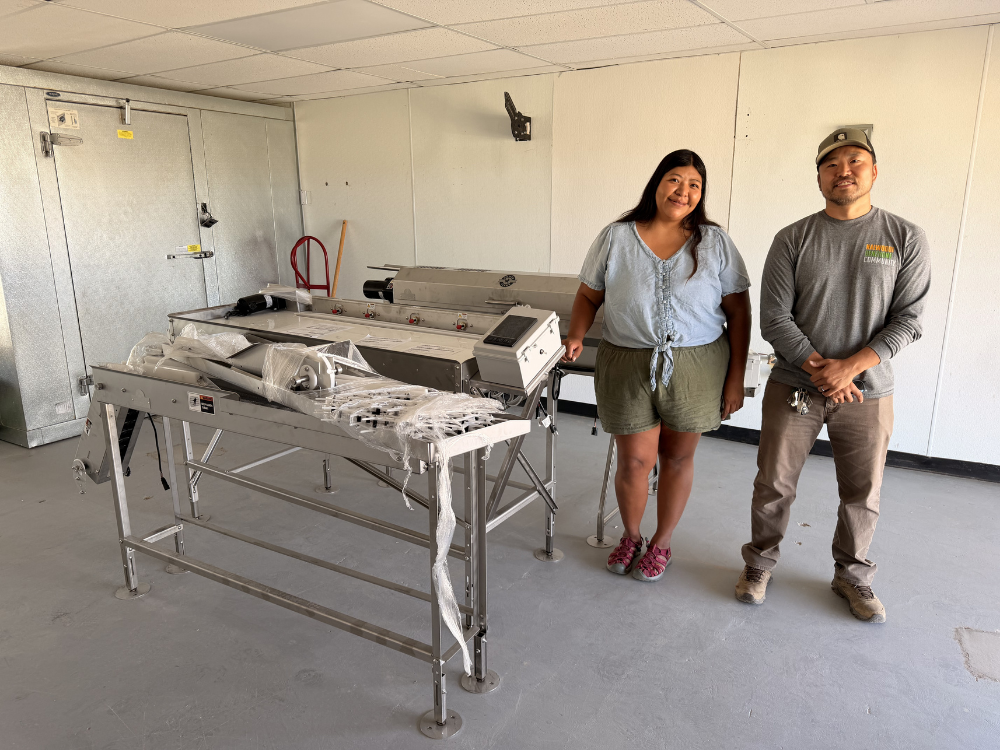
At Nalwoodi Denzhone Community Farm, the impact is deeply community-centered. Now that they have secured the egg-cleaning equipment through this award, they are able to move away from hand-washing each egg, allowing the farm to feed hundreds each month while training hundreds more, blending food production with education and food sovereignty. New partnerships—with schools, distributors, and hospitals exploring “food as medicine”—are expanding their reach. In addition to supporting the community with their products, they’re planning to grow into a local aggregation hub supporting small producers across the community.
At Cattlemen’s Processing, investments in infrastructure have stabilized and expanded operations. Improved systems—especially HVAC—have increased efficiency, reduced losses, and allowed them to take on more producers. The result: new jobs, longer hours, and a growing customer base across the region.
Taken together, these three sites illustrate different points along the same value chain—and reflect the same transformation. Oatman Flats Ranch is scaling production and navigating distribution. Nalwoodi Denzhone is increasing egg production that will tie into building community-centered aggregation and education. Cattlemen’s Processing is strengthening the critical middle infrastructure that allows producers to bring products to market.
What connects them is not just funding, but function. Each is addressing a gap: in grain processing and distribution, in culturally rooted food access and aggregation, in meat processing capacity. All while doing so in a way that ripples outward—creating jobs, strengthening local economies, and building pathways for others to participate.
The story here isn’t just about three successful projects. It’s about what happens when investments are made across a system. Flour reaches schools. Eggs and produce reach hospitals. Livestock producers find reliable processing. With this, across the Southwest, a more connected, resilient regional food economy begins to take shape.

Leave a Reply